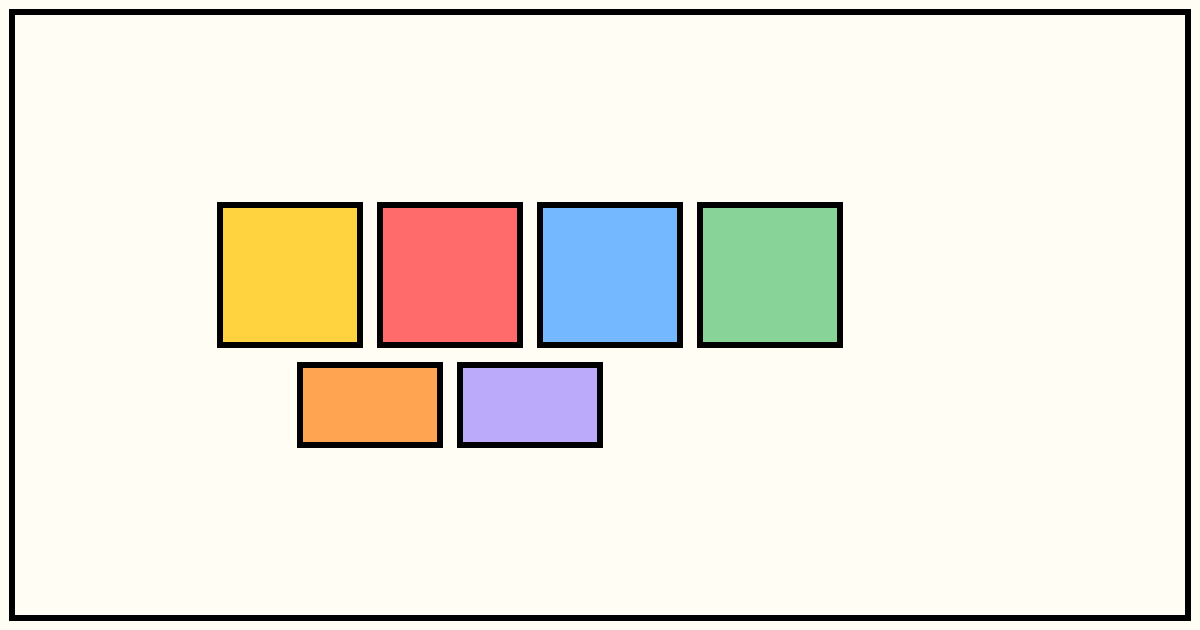
Naming six colors so they don't collide
Categorical, not semantic — why the accent tokens are named yellow, pink, and blue, not primary and success.
The six accents are named --color-yellow, --color-pink, --color-blue,
--color-green, --color-orange, and --color-lavender — by appearance,
not by role. That was a deliberate choice, and it’s the opposite of what
most token systems recommend.
Why not --color-primary / --color-success
Semantic names are the right call when a color has exactly one job —
--color-error should always mean error, everywhere, forever. But this
theme’s accents are used categorically: a pricing card is “featured” in
yellow, a testimonial cycles through all six, a badge takes whichever
accent looks good next to its neighbors. None of that is a semantic role.
Naming yellow --color-primary would just be lying about what it’s for
the first time someone used yellow on a non-primary element — which is
most of the time, here.
Where semantic naming still wins
Not every color in the theme is categorical. Alert’s four variants
(info/success/warning/error) do have a fixed meaning, so Alert.astro
maps each variant to a specific accent internally — success always
resolves to green, error always resolves to pink — rather than exposing
the raw accent name as a prop. The rule isn’t “never use semantic names,”
it’s “name the thing that has the fixed meaning, not the palette
underneath it.”